Cost-Benefit Analysis of Managed Apache Kafka vs. Self-Hosted Celery for High-Throughput Python Automation Task Queues
Editorial Perspective
Choosing between Apache Kafka and Celery is rarely a purely technical decision. In most real-world Python automation environments, the operational burden, recovery complexity, queue durability requirements, and engineering maintenance cost often matter more than benchmark throughput numbers alone.
Many engineering teams initially adopt Celery because it integrates naturally into Python applications and can be deployed quickly with Redis or RabbitMQ. However, operational complexity tends to increase non-linearly once workloads begin scaling across multiple worker nodes, especially when retry logic, queue persistence, and worker orchestration become critical to business continuity.
On the other hand, Kafka is frequently introduced too early. For small automation pipelines processing only a few thousand tasks per hour, Kafka can become operationally excessive relative to the actual business value generated by the workload.

Cost-Benefit Analysis of Managed Apache Kafka vs. Self-Hosted Celery for High-Throughput Python Automation Task Queues
Modern Python automation systems increasingly depend on asynchronous execution models to process background workloads efficiently. These workloads commonly include API aggregation, data synchronization, scheduled reporting, AI inference pipelines, email processing, web scraping orchestration, and event-driven SaaS operations.
As throughput requirements increase, engineering teams eventually encounter a strategic infrastructure decision: whether to continue operating self-managed Celery workers with Redis or RabbitMQ, or transition toward a distributed streaming architecture built around Apache Kafka.
Both approaches are technically viable, but they optimize for fundamentally different operational priorities. Celery prioritizes rapid Python-native task execution and simplicity, while Kafka prioritizes durability, partition-based scalability, and distributed event streaming reliability.
Why Celery Remains Popular in Python Automation Environments
Celery remains one of the most widely adopted asynchronous task queue frameworks in the Python ecosystem because it integrates naturally into existing Python applications without requiring major architectural redesigns.
For many internal automation systems, Celery provides sufficient operational capability with relatively low initial complexity. A small engineering team can typically deploy Redis-backed Celery workers within a few hours, making it highly attractive for MVP environments and internal tooling.
Typical Advantages of Celery
- Rapid deployment: Celery integrates directly into Python applications with minimal infrastructure requirements.
- Low initial cost: Small VPS instances are often sufficient for early-stage workloads.
- Flexible concurrency: Worker concurrency can be tuned based on task type and memory constraints.
- Strong Python ecosystem integration: Native support for Django, Flask, FastAPI, and custom Python workflows.
Operational Problems That Commonly Appear Later
The operational weaknesses of Celery typically do not appear during early deployment stages. Instead, they emerge gradually as workloads become distributed across multiple services and worker clusters.
One frequently underestimated problem is Redis memory saturation during burst traffic windows. When queue persistence is enabled without aggressive expiration policies, memory fragmentation can become a significant operational issue.
Another common problem involves worker retry storms. If downstream APIs begin failing while retry policies remain too aggressive, worker nodes can unintentionally amplify infrastructure load and destabilize the queue environment.
RabbitMQ deployments improve reliability compared to Redis in many production environments, but RabbitMQ clustering introduces its own operational challenges, including queue mirroring complexity, node synchronization overhead, and more difficult recovery procedures during infrastructure failures.
Why Kafka Becomes Attractive at Scale
Apache Kafka was not originally designed as a traditional task queue. Instead, it was architected as a distributed event streaming platform optimized for durability, horizontal scalability, and high-throughput message ingestion.
However, these architectural characteristics make Kafka highly attractive for automation systems processing extremely large task volumes or requiring durable event replay capabilities.
Unlike Redis-based queues, Kafka persists messages directly to disk and replicates them across brokers. This dramatically reduces the probability of catastrophic queue loss during infrastructure failures.
According to official Apache Kafka architecture documentation, partition-based scaling allows consumer groups to process workloads in parallel while preserving ordered message streams inside each partition.
Operational Benefits of Managed Kafka Services
- Reduced infrastructure maintenance: Cluster upgrades, broker failover, and replication management are outsourced.
- High durability guarantees: Messages remain recoverable after worker or node failures.
- Elastic throughput scaling: Additional partitions and consumers allow large horizontal scaling.
- Strong observability tooling: Enterprise Kafka platforms provide monitoring, retention controls, and lag visibility.
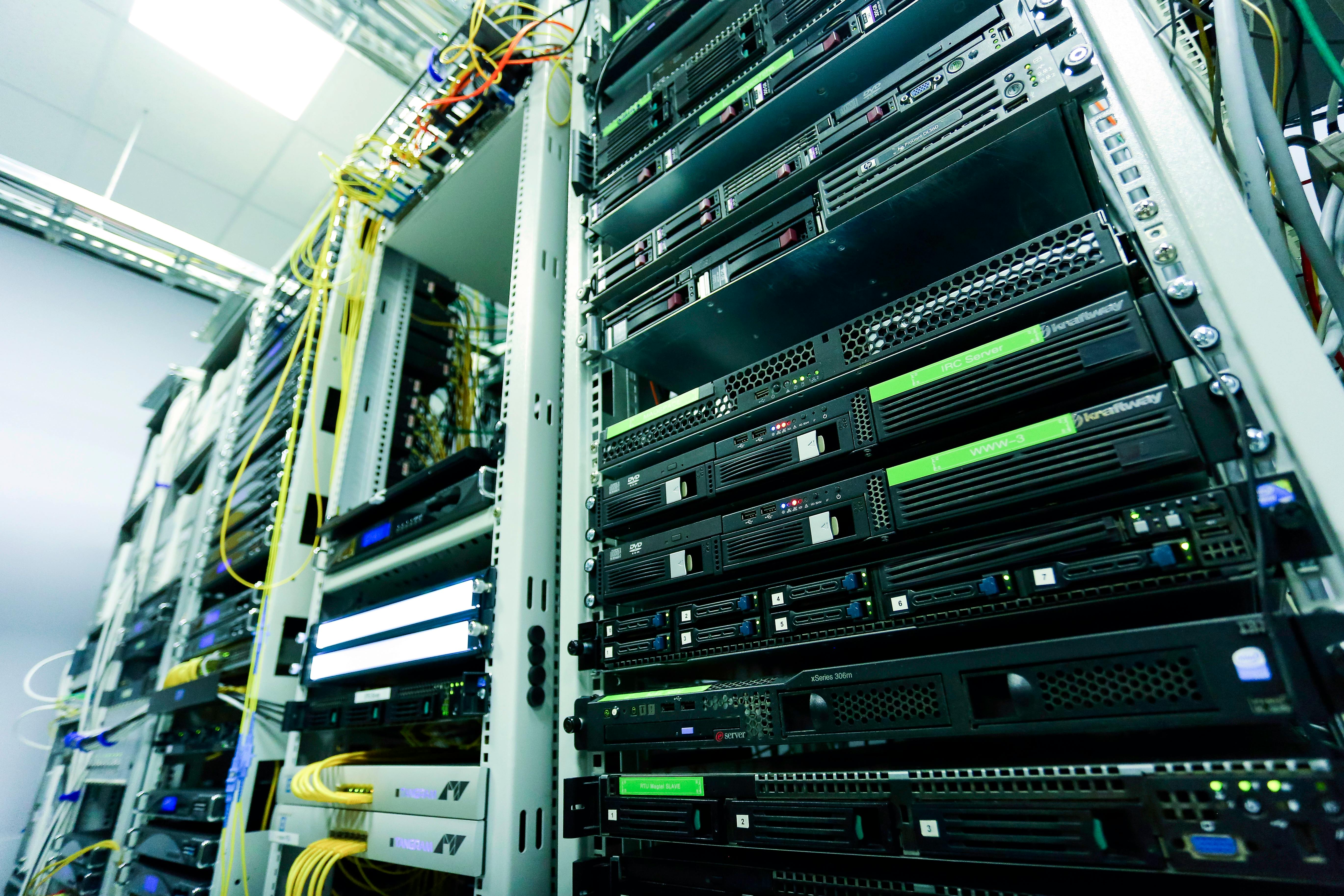
Infrastructure Complexity Comparison
| Category | Self-Hosted Celery | Managed Kafka |
| Initial Setup Speed | Very Fast | Moderate |
| Python Integration | Excellent | Requires Additional Architecture |
| Operational Maintenance | High | Lower |
| Durability | Broker-dependent | Very Strong |
| Scaling Complexity | Moderate to High | Designed for Horizontal Scale |
| Infrastructure Predictability | Higher Fixed Cost Visibility | Usage-based Pricing Complexity |
| Recovery Tooling | Manual Recovery Often Required | Automated Failover Common |
Cost Analysis Beyond VPS Pricing
One of the biggest misconceptions in infrastructure discussions is assuming that lower VPS pricing automatically produces lower total operating cost.
In practice, labor cost often exceeds infrastructure cost surprisingly quickly. A small cluster of low-cost VPS servers may appear inexpensive on paper, but operational overhead accumulates through:
- Broker maintenance
- Worker monitoring
- Queue recovery procedures
- Scaling adjustments
- Infrastructure patching
- Security updates
- Backup verification
Many small engineering teams underestimate the operational fatigue associated with maintaining distributed RabbitMQ clusters during rapid growth phases. The infrastructure itself may remain inexpensive, but engineering attention gradually shifts away from product development toward infrastructure troubleshooting.
Where Self-Hosted Celery Is Financially Efficient
Self-hosted Celery environments remain highly cost-effective for:
- Internal business automation
- Moderate asynchronous workloads
- Nightly scheduled processing
- Small SaaS backends
- Low-volume event pipelines
In these scenarios, a few VPS instances with Redis or RabbitMQ often provide acceptable reliability at very low monthly infrastructure cost.
Where Kafka Becomes Financially Justified
Kafka becomes increasingly attractive once workloads reach a scale where infrastructure downtime directly impacts revenue, customer trust, or operational continuity.
Examples include:
- Real-time analytics pipelines
- Financial transaction processing
- Massive event ingestion systems
- Large e-commerce recommendation systems
- AI inference event streaming
At this stage, durability guarantees and operational automation often justify the higher managed service pricing.
Realistic Operational Tradeoffs
One operational reality frequently ignored in theoretical architecture discussions is recovery complexity.
Many self-hosted Celery deployments function normally during stable traffic conditions, but infrastructure recovery procedures become significantly more difficult during partial outages or cascading worker failures.
Kafka environments are not simple either. Improper partition design, consumer lag accumulation, and excessive topic retention policies can produce serious operational inefficiencies.
However, managed Kafka platforms typically provide observability tooling that reduces diagnostic effort compared to manually maintained queue clusters.
This difference becomes especially important for smaller engineering organizations without dedicated SRE teams.

Technical FAQ
Can Redis reliably handle large Celery workloads?
Redis can handle moderate-to-high throughput workloads effectively, but durability and persistence configuration become increasingly important at scale. Without careful memory management and queue expiration policies, Redis-based task systems can experience instability during burst traffic events.
Is RabbitMQ better than Redis for Celery production environments?
RabbitMQ generally provides stronger delivery guarantees and more advanced routing capabilities. However, RabbitMQ clustering introduces additional operational complexity that smaller engineering teams may underestimate initially.
At what scale does Kafka become operationally reasonable?
There is no universal threshold, but Kafka typically becomes more attractive when:
- task durability becomes mission-critical
- throughput grows continuously
- multiple downstream consumers are required
- event replay capabilities become operationally important
Is managed Kafka always more expensive?
Direct infrastructure pricing is usually higher for managed Kafka. However, total cost of ownership may become lower once operational labor, downtime risk, and infrastructure maintenance overhead are included in the calculation.
Final Analysis
For many small-to-medium Python automation environments, self-hosted Celery remains the most practical solution. Its deployment simplicity, low initial infrastructure requirements, and strong Python integration make it highly efficient for moderate asynchronous workloads.
However, operational complexity grows substantially as throughput, durability requirements, and infrastructure scale increase. At that stage, Kafka's architectural advantages become increasingly difficult to ignore.
The most important strategic consideration is not raw throughput alone, but rather how much operational burden an engineering organization is realistically prepared to maintain internally over multiple years.
In many cases, the true infrastructure bottleneck is not CPU or memory capacity, but engineering attention itself.


Comments
Post a Comment